
Active leaks and water stains
We trace leaks to the source, not just the nearest drip line. Common causes include failed pipe boots, wall-to-roof flashing gaps, ridge or hip cap seams, and fasteners that backed out.
Serving Columbus, Ohio & surrounding areas
Mon–Sat · 7am–7pm
Stop leaks, rattles, and loose panels before they turn into interior damage. Metal Roofing Columbus provides straightforward inspections, a written repair plan, and tidy workmanship for homes and small commercial buildings.
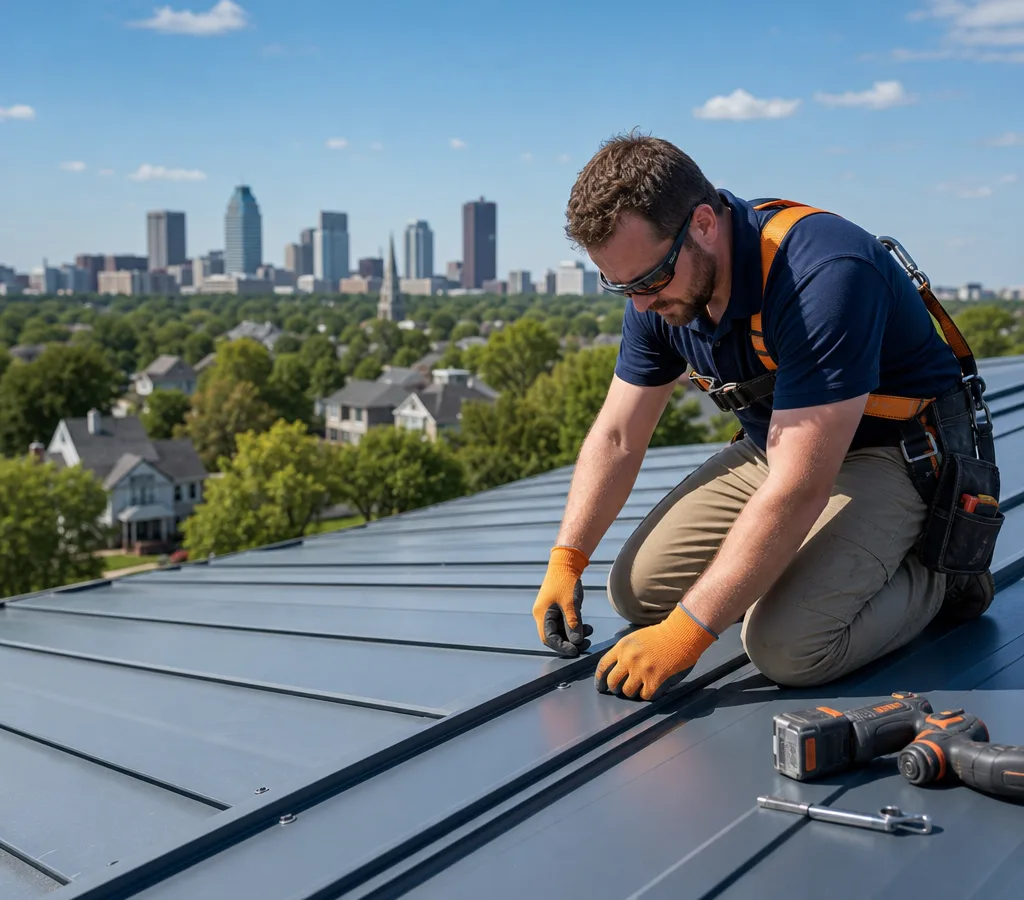
If you searched for metal roof repair Columbus Ohio, you probably have a specific problem: a drip after a storm, a panel that sounds loose in the wind, staining on a ceiling, or flashing that looks pulled away. Metal roofs can last a long time, but small failures spread quickly when water tracks under panels or into trim details.
Our approach is simple: identify the exact entry point or movement, explain what failed—fastener, seam, flashing, penetration, panel edge, or underlayment transition—then repair it with methods that match metal roofing best practices. That means using the correct sealants for metal, fastening patterns that reduce uplift and oil-canning, and repair details that respect thermal movement.
Columbus weather makes this extra important. Freeze-thaw swings, wind-driven rain, and heavy seasonal storms can exploit tiny gaps. A repair that holds for a month but cracks by winter is not a fix. We focus on durable repairs that protect the roof assembly and the building below it.
Metal Roofing Columbus is based in Columbus (43201). If you need broader help with metal roofing beyond repairs, our team also handles related metal roofing work in Columbus.
We trace leaks to the source, not just the nearest drip line. Common causes include failed pipe boots, wall-to-roof flashing gaps, ridge or hip cap seams, and fasteners that backed out.
Exposed-fastener systems can loosen over time as the roof cycles hot to cold. We reset, replace, and gasket-correct fasteners, and address the reason they moved, including panel flex, substrate issues, or missed framing.
Standing seam and lapped panels rely on tight, continuous connections. We re-secure or rework seams where movement or installation details allow water to wick in during wind-driven rain.
Many roof problems start at transitions. We repair step flashing, counterflashing, and termination bars so water sheds correctly instead of getting trapped behind metal trim.
After hail or debris strikes, we check for punctures, bent ribs, and damaged coatings. Some issues are cosmetic; others create an actual water path. We explain the difference clearly.
Surface oxidation can be addressed early with proper prep and compatible coatings. If corrosion has reached fastener lines or panel laps, repairs may involve targeted panel replacement.
The best metal roof repair is usually small, specific, and detail-driven. Many quick fixes fail because they ignore how metal moves. Panels expand and contract, and sealants or patches that cannot flex will split.
When we repair a leak, we look closely at:
In Columbus, older neighborhoods like Clintonville and Old North can have a mix of additions, dormers, and porch tie-ins where flashing details get complicated. Those intersections are common leak sources, so we spend time there during inspection.
If your roof is standing seam, repairs must preserve the seam profile and attachment method. When the situation calls for a larger scope than a repair, we will tell you early so you can make an informed decision.
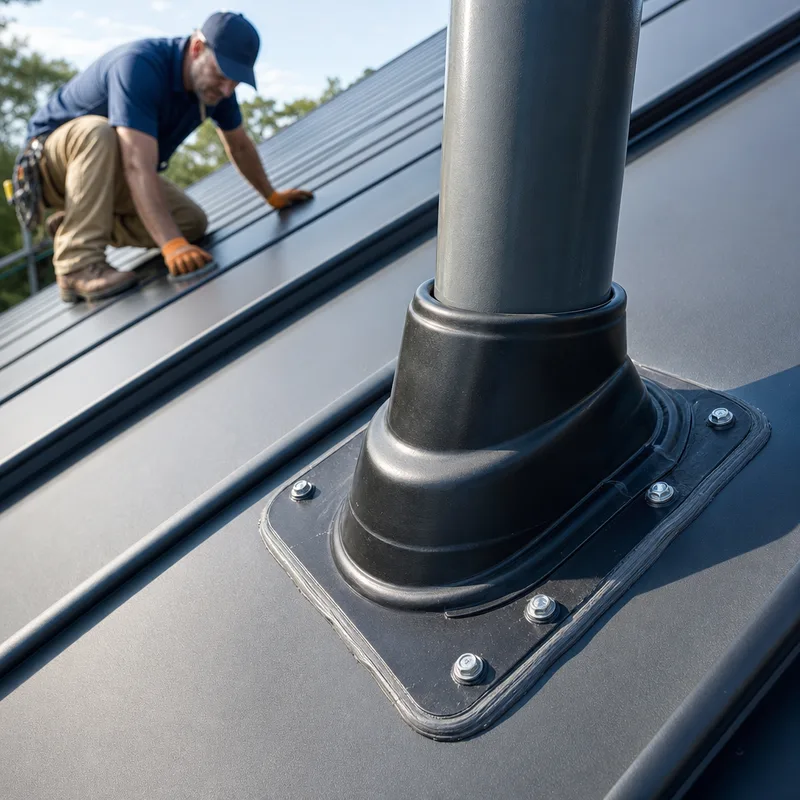
We inspect panels, seams, fasteners, flashing, and penetrations, then follow water paths to the likely entry point. We also look for movement, substrate issues, and signs of past patching.
You get a plain-language plan: what failed, what we recommend, and what alternatives exist if there are multiple ways to fix it. We note access considerations like steep pitch, height, and fragile areas.
We protect landscaping and walkways, stage materials, and plan safe roof access. Magnetic sweeping and cleanup are standard because loose fasteners and metal shavings do not belong in your yard.
We use compatible sealants and repair details meant for metal roofing, then re-check the surrounding area so the same condition is not present a few feet away.
We show what was repaired and point out any watch-items you should keep an eye on after the next big rain or wind event.
Metal roof repair in Columbus typically ranges from about $300 to $1,500 for smaller issues like fastener resets, localized flashing repairs, or a single leak source, while more involved repairs—multiple leak points, seam work, or partial panel replacement—often run $1,500 to $4,000+.
Your final price depends on roof height and pitch, access, the roof type—standing seam versus exposed fastener—how many areas need attention, and whether previous patching must be removed. We confirm the exact scope and cost after an on-site inspection.
If you have an active leak or visible damage, getting it inspected quickly helps limit insulation, decking, and drywall repairs inside the home.
Response time depends on weather and current scheduling, but urgent leak situations are prioritized when conditions are safe to work on a roof. If rain is active or lightning is nearby, we may start with planning and temporary risk reduction, then complete the repair when it is safe and the roof surface is workable.
Yes, many standing seam issues can be repaired without full replacement when the problem is isolated to flashing, a penetration, a localized seam separation, or a damaged trim detail. The key is using repair methods that preserve the seam geometry and allow thermal movement, rather than fastening through seams in a way that creates new leak points.
The most common leak sources are penetrations—vent pipes and exhausts—wall and chimney flashing transitions, and fasteners or washers that have loosened or degraded on exposed-fastener systems. Wind-driven rain during Ohio storms can push water into small gaps that would not leak during a straight-down rain.
A temporary seal can reduce water entry, but caulk or roof cement is rarely a lasting repair on metal because it may not bond well to aged coatings, may be incompatible with existing materials, and often cracks as the panels expand and contract. A durable repair usually involves correcting the flashing detail, fastener condition, or seam attachment, then using a metal-rated sealant where it belongs.
Yes. We inspect for punctures, bent panel ribs, displaced trim, and damaged flashing. Some hail marks are cosmetic and do not affect watertightness, while other impacts open a path for water. We document what we find so you can decide on repair versus replacement of the specific affected areas.
Not always. Panel replacement is usually needed when metal is torn, punctured, severely deformed at seams, or corroded through, or when repeated past patching has compromised the panel edges. If replacement is the best option, we keep it as localized as possible and match profile and color as closely as available materials allow.
Tell us what you are seeing—leak location, loose panels, rust, or storm damage—and we will schedule an inspection, provide a written scope, and recommend the most practical repair for your roof.