
Clear system recommendations
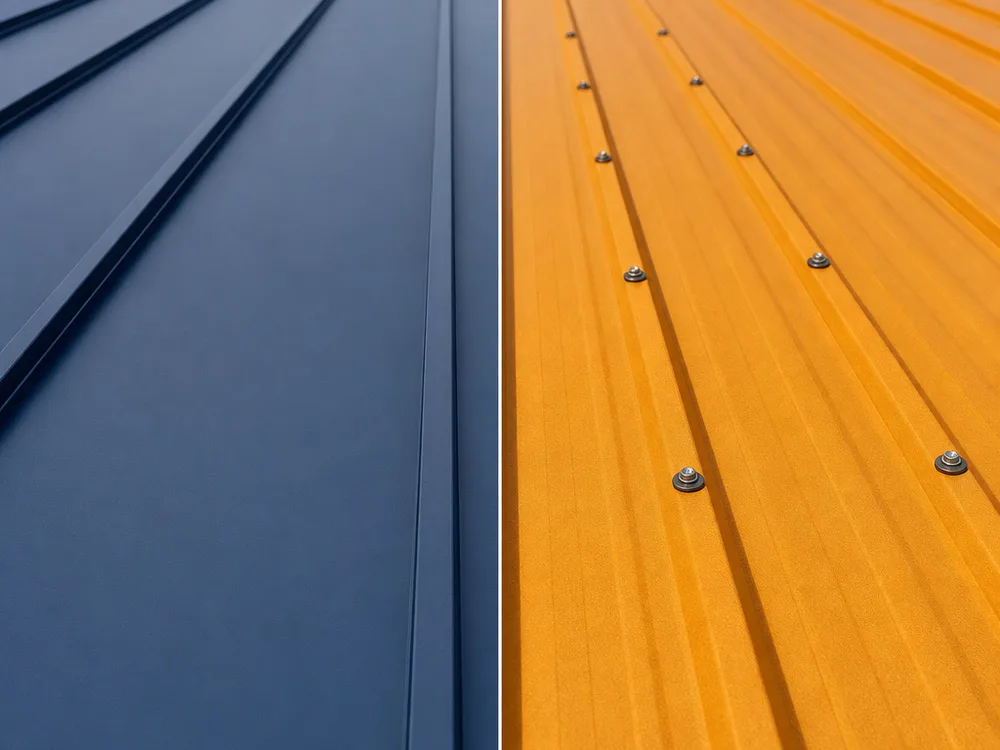
A metal roof is not one product. You should be shown the difference between exposed-fastener panels and standing seam, how each is detailed, and what is included in the scope.
Serving Columbus, Ohio & surrounding areas
Mon–Sat · 7am–7pm
Get a roof that holds up to Central Ohio weather with an experienced crew, proven metal systems, and a written scope you can actually compare.
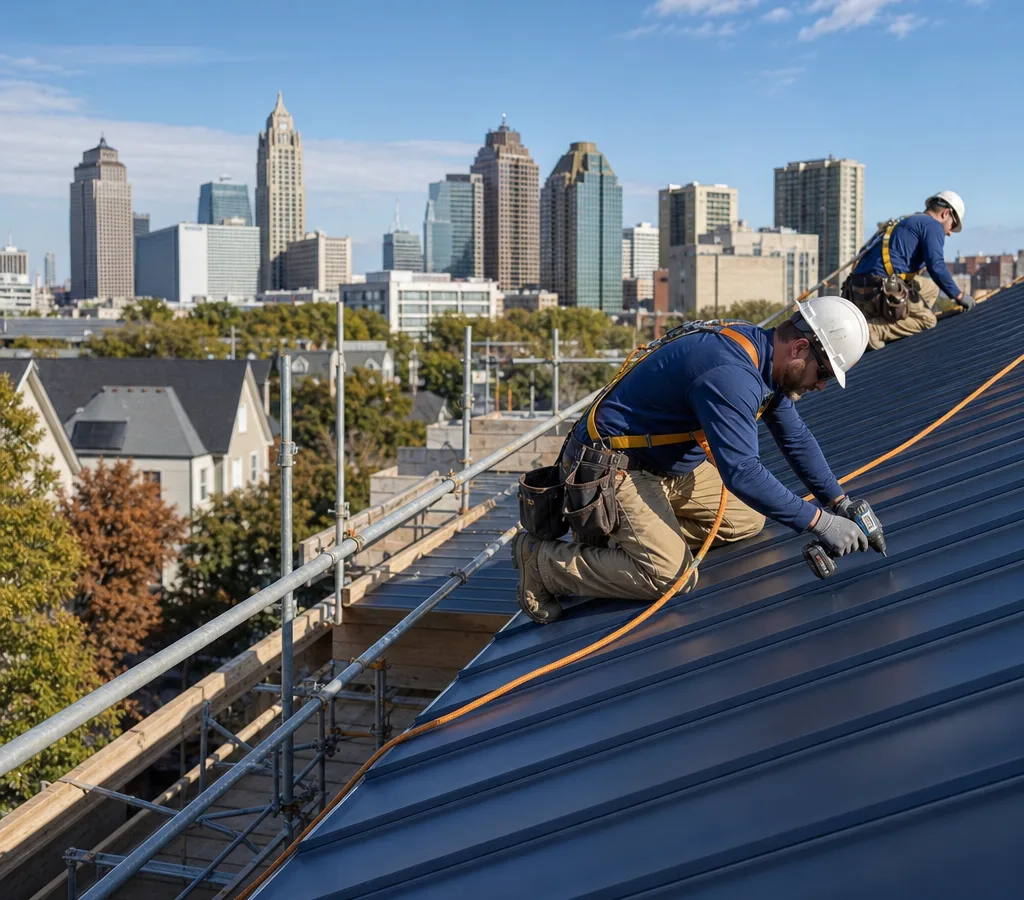
If you are searching for a Columbus metal roofing company, you are usually trying to solve a specific problem: a roof that has to last, look clean, and handle the wind, rain, and freeze-thaw cycles we see around Columbus.
Metal Roofing Columbus installs and replaces metal roofing for residential and light commercial properties across the Columbus area. We help you choose a system that fits the building and the budget, then we install it with attention to the details that matter most in metal: underlayment, flashing, ventilation, fastening, and clean terminations at valleys, walls, chimneys, and skylights.
Many Columbus neighborhoods have a mix of older rooflines and newer additions, which can make transitions tricky. In areas like Clintonville and Old North, you may see steeper pitches, dormers, and more roof penetrations to flash correctly. In German Village, tighter access and closely spaced homes make staging and cleanup planning important. In newer communities like Dublin and Westerville, rooflines can be larger and more complex, and matching the look of adjacent roofs often matters. Whatever the layout, the goal is the same: a metal roof installation that sheds water properly and stays quiet, tight, and straight for the long haul.
If you are comparing options, our work is part of what we do across metal roofing in Columbus.
A metal roof is not one product. You should be shown the difference between exposed-fastener panels and standing seam, how each is detailed, and what is included in the scope.
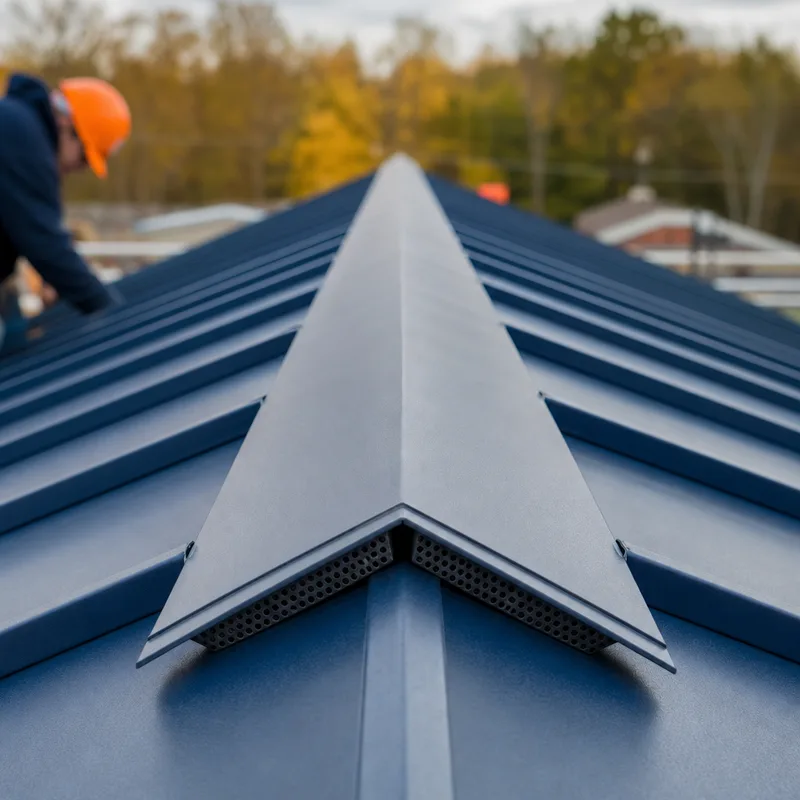
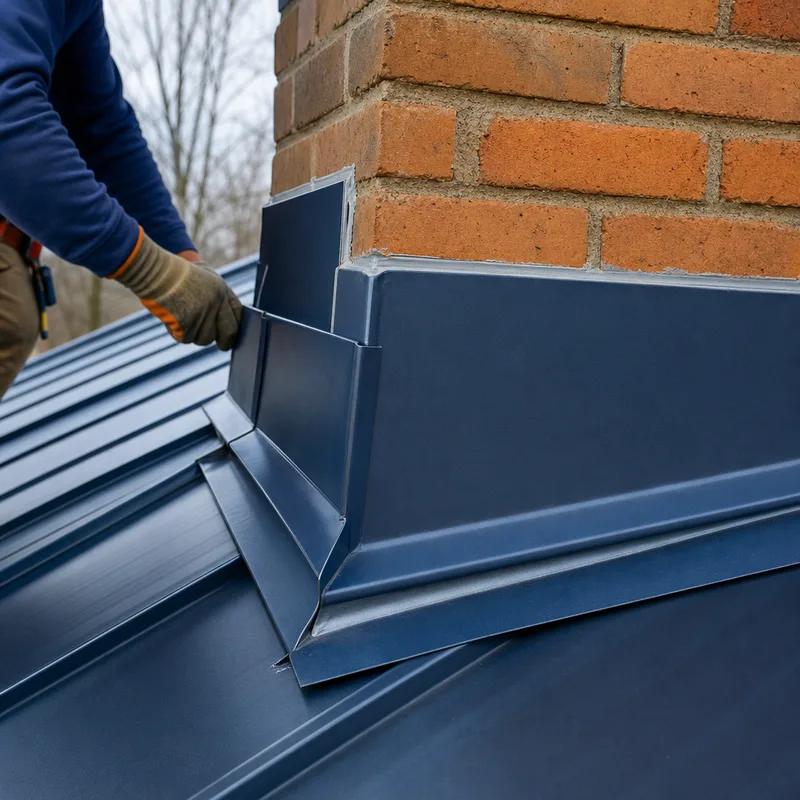
Most leaks start at transitions. We plan flashing and trim for eaves, rakes, valleys, sidewalls, chimneys, and penetrations so the roof system works as one.
Metal needs the right layers beneath it. Underlayment choice, ice-and-water coverage, and attic ventilation all affect condensation risk and roof life.
If the system uses screws, they must be placed and torqued correctly. If it is standing seam, clip spacing and panel alignment are what keep lines straight and movement controlled.
Landscaping, siding, and walkways should be protected. At the end, the property should be swept and checked for debris and metal shavings.
You should be able to line up bids and see what changes the price: tear-off needs, decking repairs, flashings, ridge venting, and accessories.
The right metal roof depends on slope, roof complexity, aesthetics, and how long you plan to own the property.
Standing seam metal roofing: Standing seam is a premium system with concealed fasteners and vertical seams. It is a strong fit for homeowners who want crisp lines and a roof designed to accommodate thermal movement. Many owners prefer it on visible front elevations and on homes with long roof planes where straight seams are most noticeable.
Exposed-fastener panels: This style uses fasteners with washers, and it is often chosen for barns, garages, additions, and some light commercial roofs. It can be a cost-effective metal option, but it relies on correct screw placement and periodic inspection over time.
Metal shingles and stone-coated steel: For homeowners who want the look of traditional shingles, metal shingle and stone-coated profiles can be a good fit. These can be useful in neighborhoods with established architectural styles where you want metal performance without a standing seam appearance.
We will walk the roof, review penetrations and transitions, and recommend the system that fits the building. If you already have a metal roof and need help deciding between repair and replacement, we can inspect the panel condition, fasteners, flashings, and underlayment signals before you commit to a full tear-off.
We review the existing roof, slopes, penetrations, drainage paths, and any areas where water or ice tends to concentrate. You get straightforward feedback on what needs to be addressed for a clean metal install.
We confirm panel type, color, trim package, underlayment approach, ventilation plan, and the details around chimneys, skylights, and walls. The scope spells out what is included so you can compare quotes fairly.
If tear-off is part of the job, we remove existing roofing as needed and check the roof deck. Any required decking repairs are handled before underlayment and water and ice protection are installed.
Panels are laid out for straight lines and proper engagement. Flashings and boots are installed with the system in mind, not treated as afterthoughts. We pay special attention to valleys, sidewalls, and penetrations.
We complete a final walkthrough, confirm water-shedding details, and leave the property clean. You also get practical guidance on what to watch for seasonally, especially after heavy storms.
Most metal roof installations in Columbus typically range from about $10,000 to $30,000+, with smaller simple roofs often landing near the lower end and larger, complex rooflines or premium systems pushing higher. Standing seam usually costs more than exposed-fastener panels because of materials, trim details, and labor.
Your final price depends on roof size and pitch, tear-off needs, number of penetrations and valleys, decking repairs, ventilation upgrades, and the metal system you choose, including gauge, finish, and trim package. Exact pricing is confirmed after an on-site roof inspection and a written scope.
“We got a detailed scope that spelled out the flashing and ventilation work, which made it easy to compare quotes. The crew kept the driveway and landscaping protected and the seams came out straight.”
“Our roof has a lot of angles and a chimney. They took their time on the transitions and walked us through what they were doing. Cleanup was solid too.”
Often, yes, because tear-off lets us inspect the roof deck, address soft spots, and install underlayment correctly for Columbus weather swings. In some situations, a metal-over installation may be possible, but it depends on the existing roof layers, decking condition, and how the edges and flashings can be properly detailed.
Standing seam typically lasts longer because the fasteners are concealed and the system is designed to move with temperature changes. Exposed-fastener roofs can perform well, but the screws and washers are wear points and should be inspected periodically, especially after strong storms.
On a typical Columbus home with attic space, proper decking and underlayment make a metal roof comparable to other roofing types for interior noise. Noise issues are more common on open-framed structures like pole barns or porch roofs unless insulation and roof assembly details are addressed.
Many residential projects take a few days, but the timeline depends on roof size, complexity, tear-off, and any decking repairs found once the old material is removed. Weather also matters, and Columbus can see sudden storms that pause work for safety and watertightness.
Most leak issues come from flashing and penetrations, not the field of the panels. Chimneys, skylights, plumbing vents, valleys, and wall transitions need the correct boots, closure strips, and step or counterflashing details matched to the metal system.
Compare the system type—standing seam, exposed-fastener, or metal shingle—along with underlayment and ice-and-water coverage, flashing scope, ventilation plan, and how decking repairs are handled if needed. A credible quote reads like a build plan, not a single line item.
Tell us what you want to improve, and we will inspect the roof, explain the system options, and provide a written scope with clear pricing for your Columbus property.