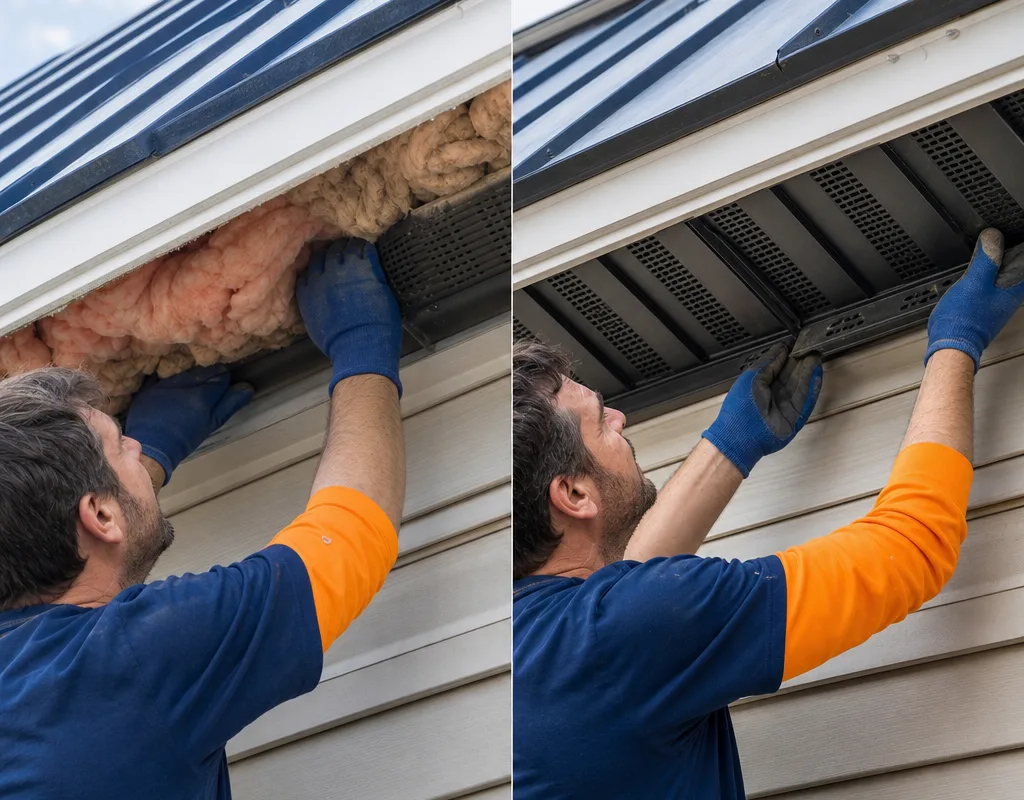
Air sealing at the ceiling plane
Stopping warm, moist air from reaching the roof cavity is often the biggest win. Sealing top plates, penetrations, and attic hatches reduces condensation risk more reliably than adding vents alone.
Serving Columbus, Ohio & surrounding areas
24/7 Response • Answered live
One call instead of ten No web forms, no callback spam Booking Fall & Winter 2026
Stop dripping, wet insulation, and mystery stains with a roof-system inspection that targets the real cause: moisture movement, missing air sealing, and incorrect ventilation paths.
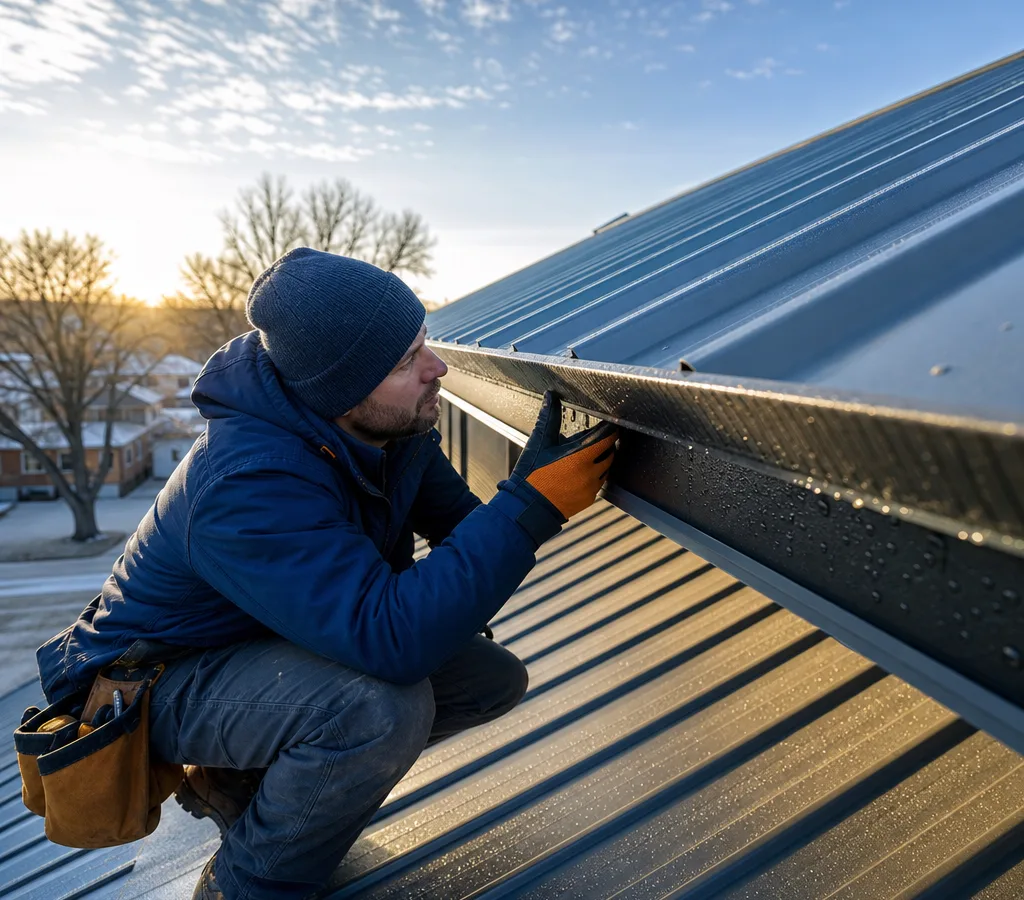
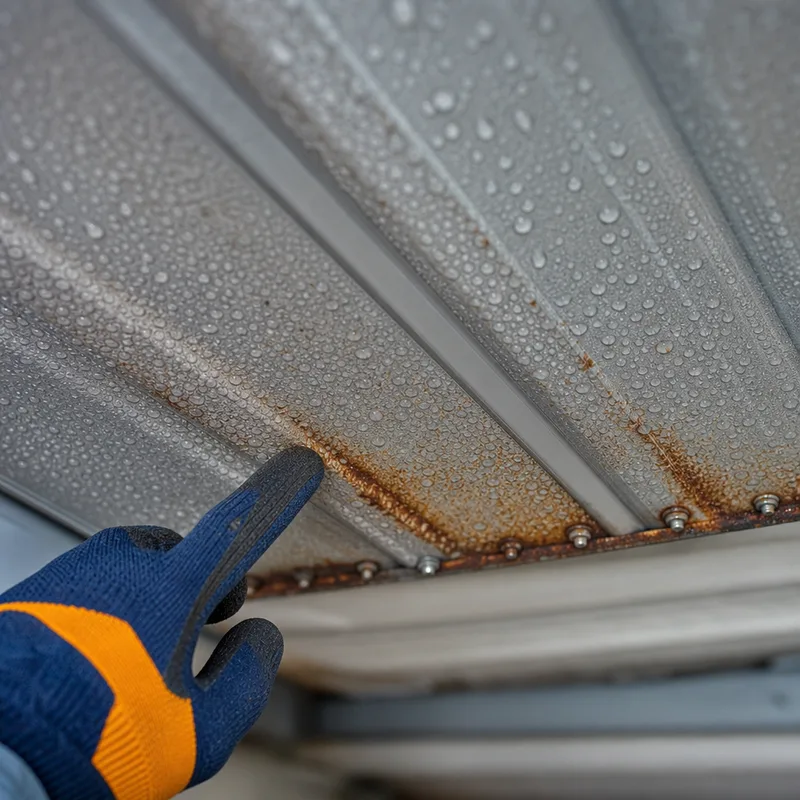
Metal roof condensation in Columbus is usually a building-science problem, not a “bad metal roof” problem. Condensation forms when warm, moisture-laden indoor air reaches a cold surface—often the underside of metal panels, purlins, or the roof deck—and that surface drops below the dew point. The result may be droplets, frost, damp insulation, rusty fasteners, ceiling stains, or a musty attic.
Columbus weather can reveal the problem quickly: humid summer air, spring and fall temperature swings, and winter cold snaps can all create the right conditions. High indoor humidity and warm air leaking into an attic or roof cavity frequently make it worse.
Common triggers include air leakage around plumbing stacks, bath fan housings, recessed lights, attic hatches, and top plates; blocked soffit intake; unbalanced intake and exhaust; thin, wet, or poorly installed insulation; and assemblies that trap moisture against cold surfaces.
Pattern is an important clue. Condensation often creates widespread dampness, droplets on metal hardware, or frost that melts later in the day. Leaks usually follow more defined pathways and recur after wind-driven rain. We confirm the cause with roof-side observations, attic or cavity checks, and close inspection of penetrations and transitions.
A lasting fix starts with finding the moisture source and the cold surface it is reaching. Our inspection focuses on how air, heat, and moisture move through your specific roof assembly.
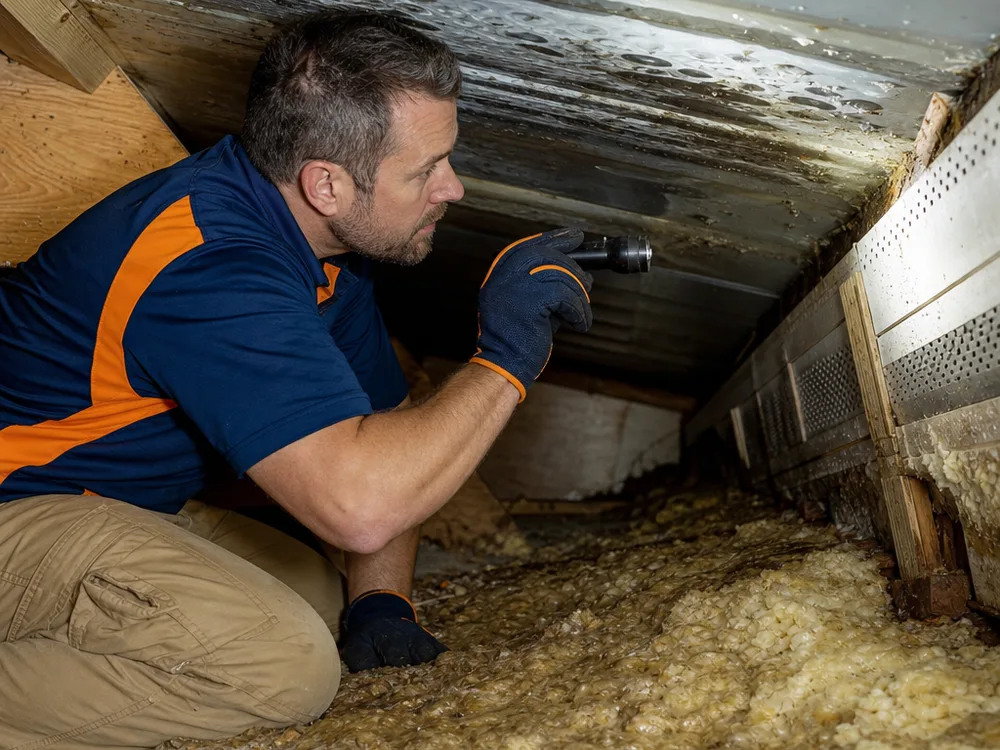
Evidence mapping: We document where moisture appears—along the ridge, at eaves, around skylights, over bathrooms, or near HVAC runs—and check for corrosion, water tracks, darkened wood, wet fiberglass, and compressed spray foam.
Ventilation paths: We inspect soffit intake, eave baffles, ridge vent continuity, possible short-circuiting at gable vents, and insulation that may be blocking airflow.
Air leakage points: Plumbing vents, bath fan ducts, recessed fixtures, chimneys, attic access points, and other penetrations can move moist indoor air into the roof cavity.
Assembly and drying potential: We identify whether the roof uses a solid deck or purlins, whether it is vented or unvented, and whether underlayment, insulation, or thermal bridges are creating cold, moisture-prone areas.
Leak details: Rusted screws and wet seams may indicate condensation, but they can also point to bulk-water entry. We check fasteners, flashing, penetrations, and transitions before recommending work.
Recommendations may include targeted air sealing, improved intake at the eaves, an adjusted exhaust strategy, corrected bath-fan ducting, or roof-detail repairs. The written scope separates condensation control from unrelated repairs so you can make a clear decision.
Stopping warm, moist air from reaching the roof cavity is often the biggest win. Sealing top plates, penetrations, and attic hatches reduces condensation risk more reliably than adding vents alone.
We look for a continuous airflow path: intake at soffits and exhaust at the ridge or another designed outlet. The goal is steady air movement, not simply more roof openings.
Insulation must match the assembly and stay clear of designed airflow paths. Wet or compressed insulation is replaced because it no longer controls heat effectively and can retain moisture.
Fans that discharge into the attic or leaky, sagging flex duct can quickly load a roof cavity with moisture. We confirm termination, connections, and routing.
Condensation and leaks can look identical indoors. We inspect flashing, fasteners, transitions, and penetrations so the work addresses the actual source.
Some assemblies trap moisture against cold surfaces. Where appropriate, we recommend changes that support drying and reduce repeated wet cycles that can contribute to corrosion or rot.
Most metal roof condensation repair work in Columbus typically ranges from about $350 to $1,800, depending on whether the fix is targeted air sealing and vent corrections or a larger rebuild of insulation and ventilation details. Smaller jobs are often in the $350 to $750 range, while projects involving wet-insulation removal, proper intake paths, and correction of multiple problem areas can run $900 to $1,800 or more.
Final cost depends on roof access, attic or cavity accessibility, how much material must be removed and replaced, and whether flashing or vent components need to change. Exact scope and pricing are confirmed after an on-site inspection.
We document where moisture appears and determine whether it is condensation, a leak, or both. That prevents spending money on the wrong fix.
We trace how air is moving—or failing to move—through the system, including intake at the eaves and exhaust at the ridge or other vents.
You receive a clear plan listing what should change and why, with options when more than one approach is reasonable for the assembly.
Typical work includes air sealing, ventilation adjustments, insulation corrections, and spot repairs where details allow moisture to accumulate.
We confirm that intake remains open, exhaust paths are continuous, and materials are dry or drying. If indoor humidity contributes, we explain practical next steps.
If you are seeing dripping, frost, damp insulation, or recurring ceiling stains, schedule an inspection while the conditions are active so we can pinpoint the cause and outline a fix that holds up through Columbus seasonal swings.
Condensation usually appears as widespread dampness, droplets beneath the metal, wet fasteners, or frost that later melts. Leaks tend to follow a repeatable path after rain and concentrate near a penetration or flashing. We inspect water tracks, staining patterns, seams, vents, and transitions to confirm the mechanism.
A ridge vent helps only when there is adequate, unblocked soffit intake and a continuous airflow path through the cavity. Adding exhaust without intake can pull warm air from the house and worsen condensation, so we verify the complete balance first.
Spray foam can reduce condensation when it is part of a properly designed unvented assembly and is installed with the necessary thickness and continuity. It can also trap moisture if the assembly cannot dry, so recommendations must reflect the existing structure and interior moisture sources.
It can occur in both seasons, but it is often most obvious during cold spells when warm indoor air leaks into a cold roof cavity. Summer issues can also occur when humid outdoor air enters a cooler cavity or bathroom and kitchen moisture discharges into the attic.
Reduce indoor moisture loading and stop obvious air movement into the attic where practical. Avoid storing items on wet insulation or covering the area with plastic, which can trap moisture. Have the assembly evaluated so air sealing, ventilation, and possible detail leaks are considered together.
Often, yes, when insulation is dry and the root cause is air leakage or blocked eave intake. Wet, compressed, or moldy insulation generally needs to be removed and replaced because it no longer insulates properly and can keep moisture in the assembly.
Tell us what you are seeing and when it happens. Metal Roofing Columbus will inspect the roof and the attic or roof cavity, then lay out a practical plan for venting, air sealing, and any needed detail repairs.