
Less disruption and debris
When an overlay is appropriate, there is less tear-off mess around landscaping, driveways, and patios, and the project can move faster because disposal is reduced.
Serving Columbus, Ohio & surrounding areas
24/7 Response • Answered live
One call instead of ten No web forms, no callback spam Booking Fall & Winter 2026
Upgrade to a metal roof without the disruption of a full tear-off when your roof qualifies. We inspect the deck, ventilation, and existing shingles, then lay out the safest, code-aware path for your home in Columbus.
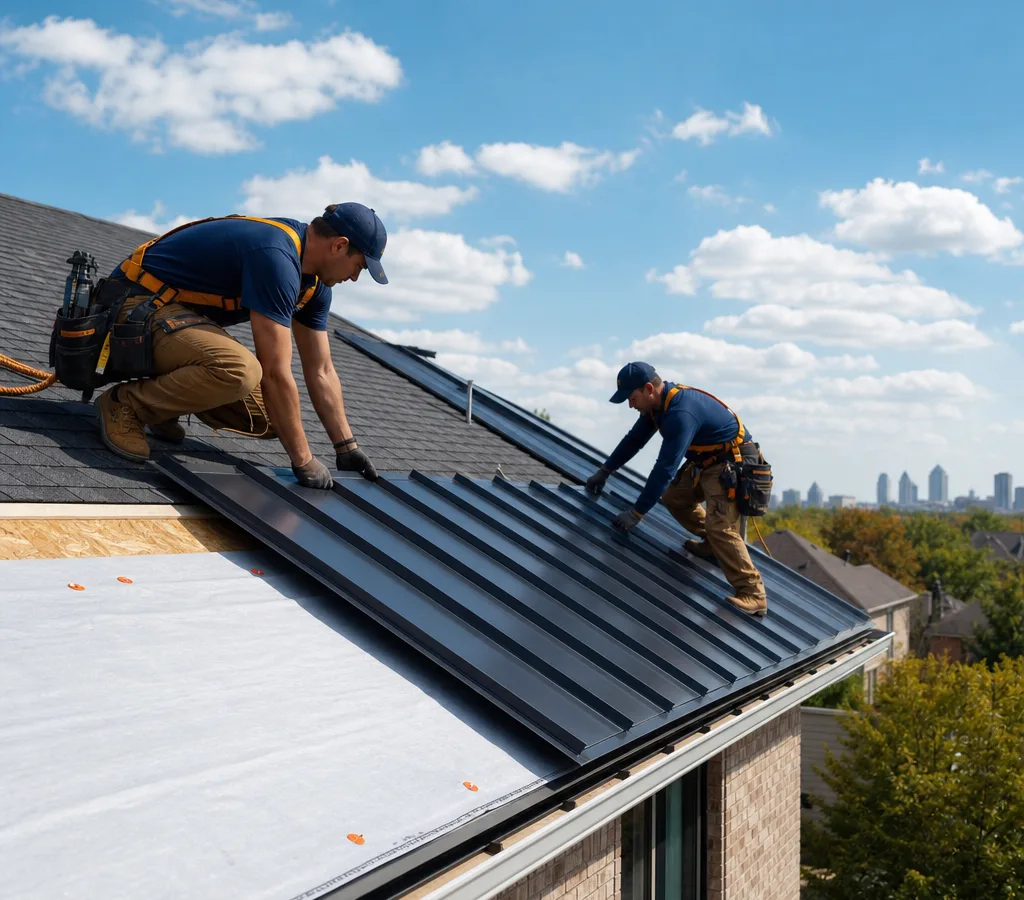
Homeowners looking for metal over shingles Columbus options usually want two things: a cleaner, faster upgrade and less mess around the house. In the right conditions, installing a metal roof over existing asphalt shingles can be a practical approach.
This is not a shortcut job. The roof still has to be structurally sound, dry, and laid out in a way that lets us fasten and flash the system correctly. Columbus homes see wide temperature swings, spring storms, and winter freeze-thaw cycles, so details like underlayment choice, ventilation, and proper edge metal matter as much as the panels themselves.
At Metal Roofing Columbus, we start with an on-roof inspection and attic checks where accessible. If the existing shingles are too curled, uneven, waterlogged, or hiding soft decking, we will tell you plainly. Some roofs qualify for an overlay. Others need targeted tear-off or full removal to do it right.
A metal-over-shingles installation is only as good as what is underneath it. Before we recommend an overlay, we verify conditions that protect the new roof long term.
Key checks we make:
In older neighborhoods with a mix of roof shapes and additions, like Clintonville and Old North, we pay extra attention to transitions, short eaves, and complex tie-ins. In newer areas with larger, simpler roof planes, like parts of Dublin and Westerville, an overlay can sometimes be more straightforward, but it still depends on what the inspection shows.
When an overlay is appropriate, there is less tear-off mess around landscaping, driveways, and patios, and the project can move faster because disposal is reduced.
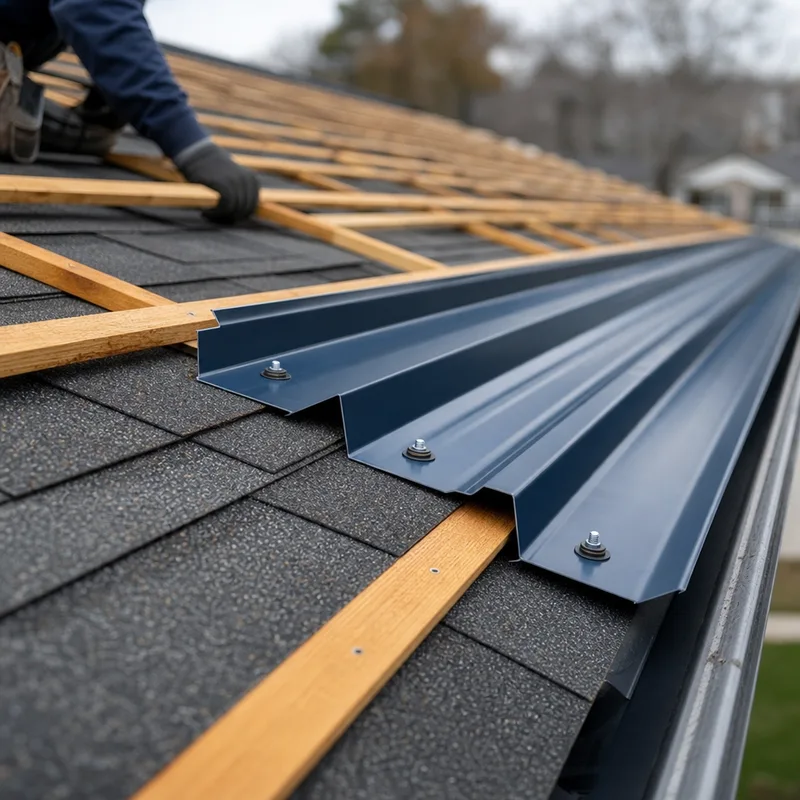
A batten system can level minor shingle texture and create consistent fastening lines, which helps panel alignment and long-term performance.
New underlayment, new edge metal, and metal-specific flashing at valleys, walls, and penetrations are what make the upgrade worthwhile.
If the existing shingles are hiding damaged decking or widespread moisture, covering them can lock problems in place. In those cases, removal is the responsible option.
How a metal roof sounds and performs depends on the system, ventilation, and insulation already in your home. We base recommendations on what is actually in your attic and roof assembly.
We check shingle condition, roof planes, penetrations, and any visible decking concerns. Where accessible, we look for ventilation balance and signs of moisture from the attic side.
You get a clear recommendation with the reasons. If an overlay is viable, we spell out the build-up—underlayment, battens if used, panel profile, and flashing plan. If it is not, we explain what has to be removed and repaired.
We protect landscaping and staging areas, then install the moisture-control layers and the fastening plane required by the chosen system. This is where straight lines and proper spacing get established.
Panels are installed with attention to manufacturer fastening patterns and clean, watertight transitions at ridges, hips, valleys, chimneys, and walls.
We verify trim and flashing details, magnetic-sweep work areas, and review basic care, including what to watch after heavy storms and how to keep gutters and roof edges clear.
Most metal-over-shingles projects in Columbus typically land in the $12,000 to $30,000+ range, with smaller, simple rooflines at the lower end and larger or complex roofs—multiple valleys, dormers, and tall pitches—at the higher end. If the roof needs a batten system, extensive flashing work, or selective tear-off and decking repairs, pricing moves up accordingly.
Your final cost depends on roof size and slope, panel type and gauge, underlayment and ventilation upgrades, access and staging, and how many penetrations and transitions must be re-flashed. We confirm eligibility and provide a firm scope after an on-site inspection.
Some patterns show up often around Columbus.
If your home has a single layer of shingles that still lies relatively flat and the decking is solid, an overlay can be a good fit. This is more likely on roofs that have not been through multiple re-roofs.
Overlays tend to fail when the roof already has trapped moisture, uneven planes from past repairs, or problem flashing at chimneys and sidewalls. In neighborhoods with a lot of older brick chimneys and roof-to-wall intersections, like parts of German Village, the flashing scope can be the make-or-break factor. We would rather do extra detail work up front than leave you with a leak that only shows up after a hard rain and wind.
Hail and wind events also matter. Central Ohio sees strong thunderstorms that can damage ridge caps, vents, and exposed flashings. If we find storm-related damage that compromises the base roof, we will recommend the repair path that gives the new metal roof a stable foundation.
If you are still comparing metal profiles and want a broader look at systems, metal roofing in Columbus can help you sort through common panel options before we get into job-specific details.
Sometimes, but it depends on roof condition and how uneven the surface is, and in many cases removal is the safer choice. Two layers can hide soft decking and create a wavy plane that makes metal harder to fasten and flash correctly. We confirm what is on the roof and what is underneath during the inspection, then recommend overlay, partial tear-off, or full tear-off based on what we can verify.
It can if ventilation is poor or if the existing roof has moisture problems already. In Columbus, winter freeze-thaw makes moisture control important, so we look at attic intake and exhaust, check for signs of condensation, and specify underlayment and build-up details that manage water vapor and wind-driven rain. If the assembly cannot dry properly, we will not recommend covering it.
Often, yes, because battens can flatten the plane and provide consistent fastening lines for the metal system. Whether battens are needed depends on the panel type, the roof geometry, and how flat the existing shingles are. When battens are used, spacing and fastening into framing are planned so the system stays straight and secure.
Many homes can be completed in a few days, but timeline depends on roof size, complexity, weather, and how much flashing and ventilation work is involved. Columbus weather can interrupt scheduling during stormy stretches, so we plan around forecast windows and keep you updated if rain or high wind affects safe installation.
We typically replace or rebuild critical flashings so they match the new metal system and are not relying on aging shingle-era details. Chimneys, sidewalls, and valleys are common leak points, and they are also where a metal upgrade can be done exceptionally well when flashed correctly. The exact approach is part of the written scope after inspection.
Make sure we can safely access the attic, if you have one, and that the driveway or staging area is clear for ladders and material delivery. If you have records of past roof repairs, leak locations, or photos from storm events, set them aside. That context helps us pinpoint whether the existing shingles are a sound base or whether removal is the smarter path.
Share a few details about your home in Columbus and what you want to change. Metal Roofing Columbus will inspect the roof, explain the options in plain language, and provide a written scope you can trust before any work starts.