One call instead of ten No web forms, no callback spam Booking Fall & Winter 2026

Winter Snow Metal Roofs · Columbus, Ohio

Columbus OH Winter Snow Metal Roof Guide

Snow should slide off a metal roof predictably, without turning your gutters, walkways, and valleys into ice problems. Get practical, Columbus-specific guidance on safer shedding, ice control, and winter-ready details.

✓ On-site risk-zone review
✓ Snow-shedding guidance
✓ Clear written scope
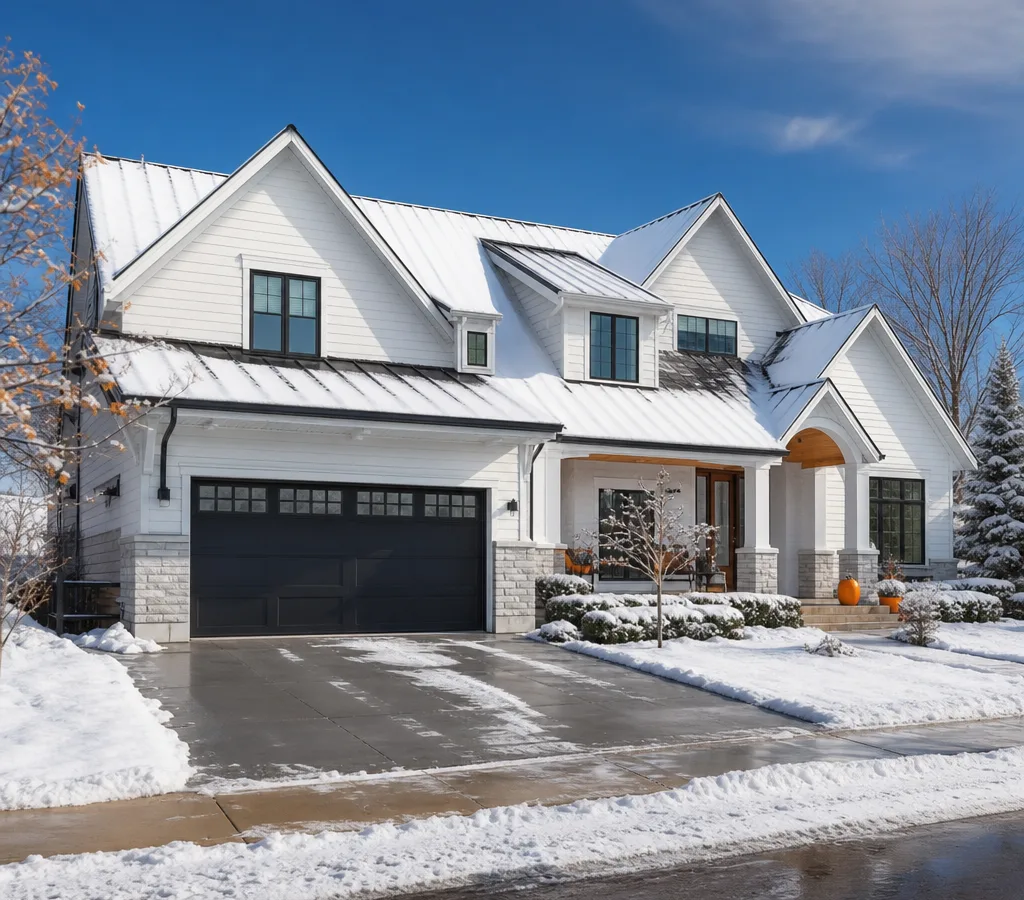
Columbus-area home with a metal roof after snowfall, controlled snow shedding zones, and clear eaves above a driveway and front walk
Central Ohio Durability

What a Columbus OH winter snow metal roof needs to do

A Columbus OH winter snow metal roof has two jobs when temperatures swing: shed snow in a controlled way and keep meltwater from backing up into vulnerable roof details.

In Central Ohio, several freeze-thaw cycles can occur in a single week. Snow on warmer roof areas may melt during the day, then refreeze at colder eaves or shaded areas. That ice can push water beneath panels or into transitions at valleys, wall lines, chimneys, and vent stacks. Metal sheds faster than many roof types, but it still needs the right underlayment, flashing, and edge details.

A winter-ready roof should:

  • Release snow in smaller amounts or planned zones rather than one heavy slide.
  • Keep eaves, gutters, and valleys clear enough to drain.
  • Keep seams, fasteners, and flashings watertight through repeated freezing and refreezing.
  • Protect walkways, steps, driveways, and equipment below roof edges.

Metal Roofing Columbus works with homeowners across Columbus, including properties with shaded roof lines, tall street trees, older roof geometry, and dormers where valleys and wall transitions need additional winter attention.

Winter Roof Details

Winter snow + metal roof: the details that reduce ice trouble

Ice-and-water membrane at the eaves and valleys

A self-adhered membrane at eaves, valleys, and around penetrations adds a second line of defense when water backs up or refreezes. It matters most where meltwater can slow down: cold overhangs, north-facing edges, and complex rooflines.

Ventilation and insulation that limit melt-refreeze

When attic heat warms the deck, snow melts higher up and refreezes near cold edges. Balanced intake and exhaust ventilation, plus consistent insulation, helps keep roof temperatures more even.

Snow retention for control, not total blockage

Snow guards or rails can prevent sudden roof avalanches over doors and sidewalks by breaking up sliding snow or holding it for gradual melting, based on roof pitch and panel profile.

Correct flashings at walls, chimneys, and valleys

Step flashing, counterflashing, and properly formed valley metal handle expanding ice and flowing water better than improvised sealant-only fixes.

Gutter strategy that matches shedding

Gutters can be overwhelmed when snow releases. Wider gutters, fewer choke points, and planned discharge paths may work better than narrow, ice-prone sections.

Fastener and seam choices that stay tight in cold cycles

Temperature-related movement is normal. Systems that allow thermal movement and use appropriate closures and sealants at ends and transitions reduce the chance of openings forming when panels contract in the cold.

Snow-Shedding Safety

Snow shedding safety: where problems actually happen

Most winter issues are not in the middle of the roof. They show up at the edges and where people walk.

A common Columbus complaint is snow sliding from a smooth metal surface and piling directly on the front walk, driveway apron, side entry, or garage service door. Another is meltwater running to a cold gutter line, freezing, and creating a dam that traps more water behind it.

Good planning starts with a simple map of the roof and the ground below:

  • Identify roof edges above entry doors, stoops, sidewalks, patio doors, and HVAC equipment. These are candidates for snow guards or rails.
  • Look for roof areas shaded by trees or adjacent structures. Shade keeps edges colder longer and increases refreeze risk.
  • Pay particular attention to valleys and wall lines where snow and meltwater concentrate.
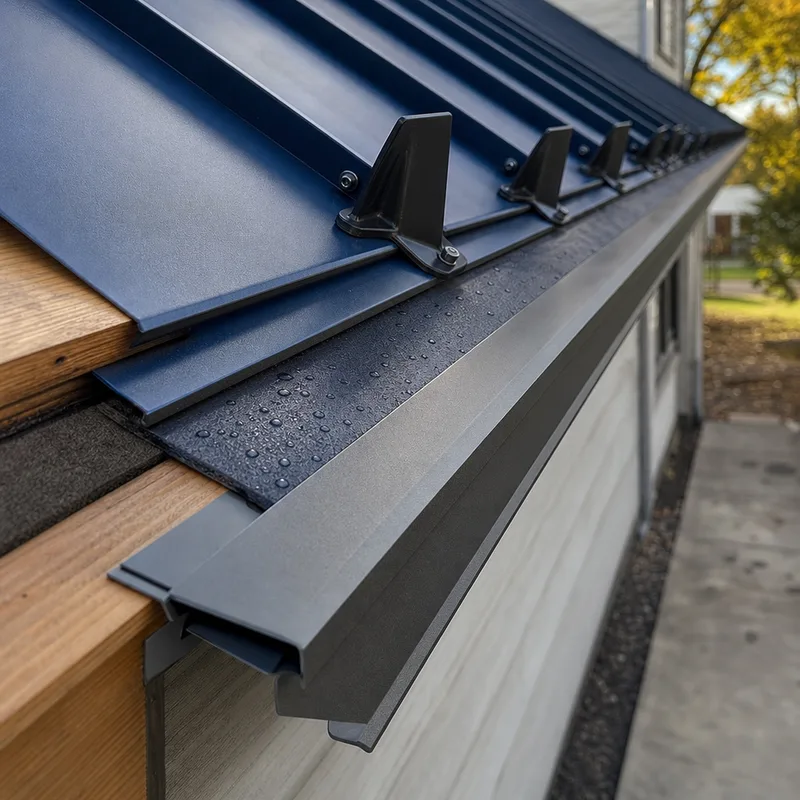
Metal roof eave detail showing the ice-and-water membrane location, drip edge, and a snow guard line above a walkway
Inspection to Plan

How we approach winter-ready snow shedding

01

Site walk and risk zones

We walk the perimeter and note where sliding snow would land, where icicles form, and where gutters and downspouts discharge. We pay attention to entries, driveways, and tight side yards where snow piles create hazards.

02

Roof measurement and detail check

We review roof pitch, panel profile, valleys, penetrations, and wall transitions. We also look for past ice-dam evidence such as stained soffits, bent gutters, or water marks at the ceiling line.

03

Ventilation and attic heat review

When attic access is available, we look for obvious insulation gaps and ventilation issues that can drive melt-refreeze. If air sealing or ventilation changes are advisable, we explain what matters and why.

04

Snow retention layout, if needed

If guards or rails make sense, we lay them out by roof plane and by what is below each edge. Placement follows panel structure and manufacturer guidance so loads transfer safely.

05

Written scope and winter maintenance plan

You receive a clear scope for upgrades, repairs, or added retention, plus practical maintenance guidance for Central Ohio winter storms and thaw cycles.

Estimate Guidance

How Much Does a Columbus OH Winter Snow Metal Roof Plan Cost in Columbus?

For Columbus homes, winter-focused improvements for snow shedding and ice control typically range from about $450 to $2,500+ depending on roof access, pitch, how many edges need protection, and whether work includes targeted repairs such as flashing, underlayment areas, or gutter changes. Small snow-guard additions over one entry are usually at the lower end, while multiple roof planes or rail systems cost more.

Final pricing depends on panel type, fastening method, roof complexity, existing conditions, and safety setup. The exact cost is confirmed after an on-site inspection and a written scope.

Columbus Winter Maintenance

What to do after big snow and thaw cycles

After heavy snow

  • Watch how snow releases. A roof plane that consistently dumps onto a high-traffic area may need snow retention.
  • Look for bent gutters, pulled gutter-hanger fasteners, or downspouts knocked loose by sliding snow.
  • Treat recurring icicles as a drainage and heat-pattern clue, not merely a nuisance.

During thaw and refreeze

  • Keep valleys and lower roof areas clear of debris so meltwater has a path.
  • If using a roof rake, avoid prying at seams, flashings, or ridge components.
  • Do not chip ice from metal panels with sharp tools. This can scar coatings and create future corrosion points.

Winter performance is not only about installation. Practical checks after storms can keep small issues from becoming leaks, especially where standing seams, transitions, and thermal movement affect snow shedding and ice control.

Homeowner Questions

FAQ: Columbus OH winter snow metal roof questions

Do metal roofs cause more ice dams in Columbus winters? +

Metal roofs do not inherently cause ice dams, but they can make ice and snow movement more obvious because snow sheds faster. Ice dams are usually driven by attic heat loss and uneven roof temperatures, then made worse by cold eaves where meltwater refreezes. The fix is typically a combination of ventilation and insulation consistency, plus eave and valley waterproofing details that handle backup.

Should I add snow guards on a Columbus OH winter snow metal roof? +

Add snow guards when sliding snow could land on entryways, sidewalks, driveways, decks, or equipment pads, or when repeated slides damage gutters. Controlled shedding can be safer than sudden releases. Placement and quantity should follow the panel type and manufacturer guidance so the load transfers correctly.

Where should ice-and-water membrane be installed for winter performance? +

For winter resilience, membrane matters most at eaves, valleys, and around penetrations and wall transitions where meltwater concentrates and can back up. In Central Ohio freeze-thaw conditions, that extra layer helps even when the metal surface sheds snow well. The exact layout depends on roof geometry and eave construction.

What are the warning signs that snow and ice are stressing my roof system? +

Repeated icicles at the same spot, gutters that twist or pull away after snow slides, water staining near exterior walls or ceiling edges, and visible gaps at flashings are common signs. Snow melting high on the roof while eaves remain packed with ice can point to heat loss and refreezing at the edge.

Can you improve winter performance without replacing the whole metal roof? +

Yes. Many winter issues can be improved with targeted work such as correcting flashings, adding membrane in vulnerable areas during a repair, updating transition closures, improving ventilation, or adding snow retention over specific edges. Whether partial work makes sense depends on roof condition, panel type, and how the problem presents.

How long does it take to add snow retention or address ice trouble spots? +

Many snow retention additions or detail repairs can be completed in a day, but timing depends on roof access, safe working conditions, and whether materials must match an existing panel profile. Winter scheduling also depends on dry roof windows and temperature limits for certain sealants and underlayment components.

Winter Roof Check

If your roof drops snow onto a walkway, forms recurring icicles at one edge, or shows signs of meltwater backing up, a short inspection can pinpoint whether the issue is shedding control, drainage, attic heat, or a detail that needs correction.

📞 Columbus • 24/7 Response
Free Roof Inspection

Get a winter-ready plan for your Columbus roof

Share what you are seeing during storms and thaws, and we will recommend practical next steps for safer snow shedding and fewer ice headaches, with a clear written scope before any work starts.